

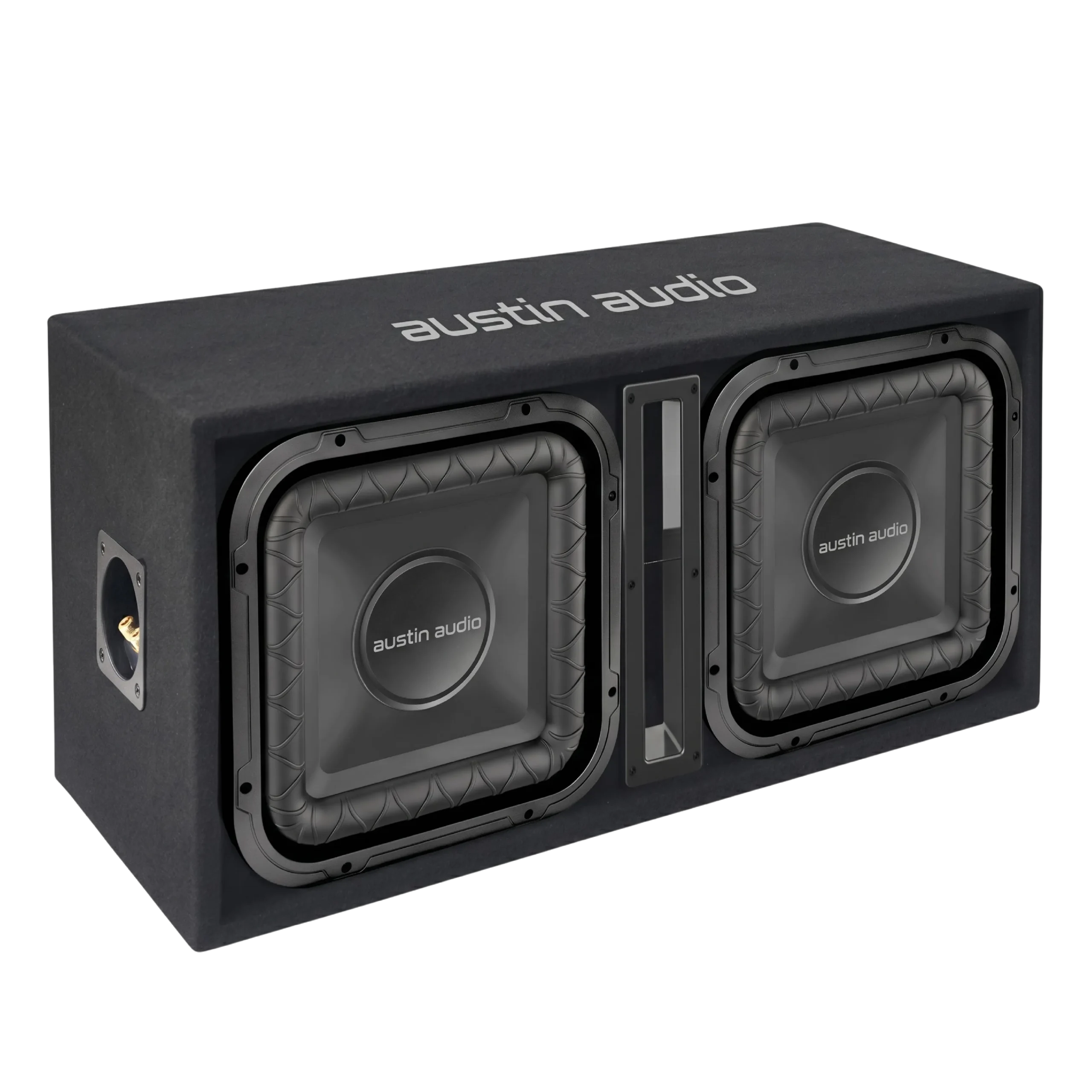
Guest Opinion: The Challenge of Unknown Enclosures
By 2016, much of the car audio conversation had shifted toward digital control, DSP refinement, time alignment, and measurement-driven tuning. Yet beneath all of that, progress remained a far more stubborn variable: the enclosure. Or more precisely, the lack of control over it.
In an ideal engineering environment, a loudspeaker is designed alongside a known enclosure. Volume, shape, material, and damping are all defined in advance. The driver and the enclosure work as a single system, predictable, measurable, and repeatable. In a car, that relationship rarely exists.
The Reality of Modern Installations
Most automotive speakers do not operate in purpose-built enclosures. Instead, they are installed into:
- Door cavities with irregular volumes
- Dashboard recesses with reflective surfaces
- Rear panels with minimal structural damping
These spaces were never designed for acoustic performance. They are compromises dictated by packaging constraints, safety requirements, and manufacturing cost. From an engineering standpoint, they are unknown enclosures. And unknown variables are where predictability begins to break down.
Why Enclosures Matter More Than Expected
A loudspeaker does not function independently. Its behaviour is directly influenced by the air volume behind it and the environment around it. An enclosure affects:
- Low-frequency response (bass extension and control)
- Cone movement (excursion limits and damping)
- Resonance behaviour (peaks and cancellations)
Change the enclosure, and you change the speaker. The same driver can sound:
- Tight and controlled in one vehicle
- Loose and undefined in another
Not because the driver has changed, but because the environment has.
The Limits of Specification
By 2016, measurement tools could define a driver’s performance with precision. But those measurements were typically conducted in controlled conditions:
- Standardised test enclosures
- Open baffles
- Laboratory environments
Once installed in a vehicle, those conditions no longer apply. This creates a disconnect between:
- Measured performance (what the driver can do)
- Installed performance (what the system actually does)
Bridging that gap is one of the most complex challenges in mobile audio.
The Role of DSP and Its Limits
Digital Signal Processing has become the primary tool for managing in-car acoustics. It can correct:
- Frequency imbalances
- Time alignment issues
- Phase inconsistencies
But DSP has limits. It cannot:
- Change enclosure volume
- Eliminate structural resonance
- Prevent air leakage in poorly sealed doors
It can compensate but not fully correct. This is where physical acoustics still defines the boundaries of performance.
Our Approach at Austin Audio
From the beginning, our engineering philosophy has been rooted in measurable behaviour under real conditions, not ideal ones.
As early as the development of the Austin Model One (AM1), the focus was not just on driver performance in isolation, but on how it behaved inside a vehicle environment where resonance, pressure variation, and enclosure inconsistency were unavoidable.
That approach continues today. We design our drivers with:
- Controlled excursion characteristics
- Stable suspension behavior
- Predictable response across varying enclosure conditions
The goal is not to eliminate the variability of unknown enclosures, which is rarely possible. The goal is to reduce sensitivity to it.
A System-Level Problem
The challenge of unknown enclosures cannot be solved by a single component.
It requires:
- Driver designs that remain stable under changing loads
- Installation techniques that improve sealing and rigidity
- DSP calibration that adapts to measured in-car response
This is where system engineering becomes essential. Not every variable can be controlled, but every variable must be accounted for.
The Takeaway
Unknown enclosures are not a new problem, but in 2016, they remain one of the least discussed. Because they resist simple solutions.
They cannot be solved with better specifications alone. They cannot be corrected entirely through software. They require a different mindset, one that accepts variability and engineers around it.At Austin Audio, this has always been part of the process. Because in the real world, sound is never produced in isolation. It is shaped inevitably by the space that contains it.