

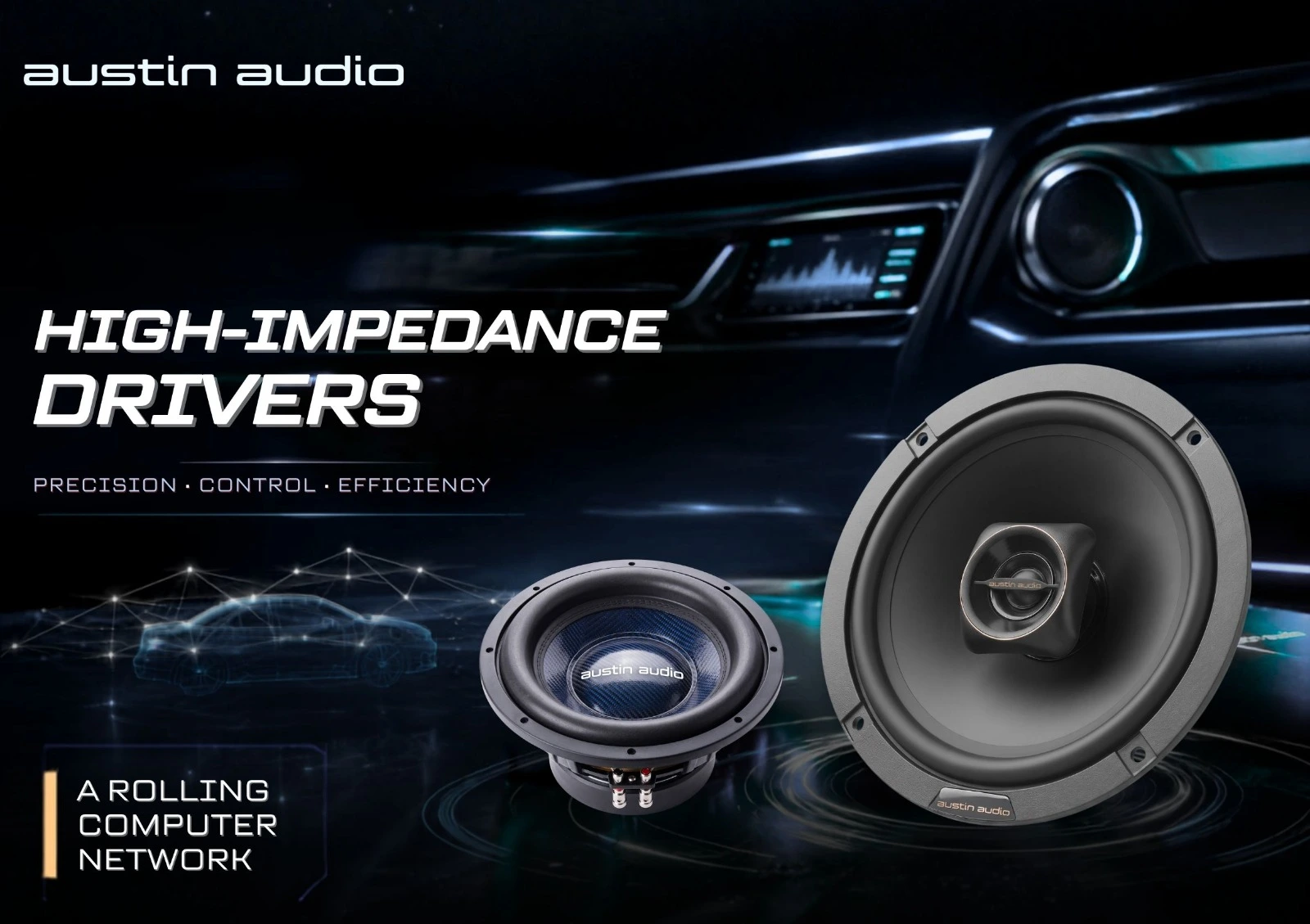
Why Premium Drivers Keep Getting More Expensive
When a good car speaker was made in the late ’70s, it wasn’t hard; materials were cheap, cars were simple, and customer expectations were low. If the listener didn’t distort what they were playing loudly (and the neighbours could clearly hear), the speaker passed. That is not how the world works any more. In 2025, development of premium loudspeakers is far more demanding technically, financially and even culturally. Consequently, it has become more and more expensive to manufacture a good high-end driver every year.
From the outside, you’d be forgiven for thinking the rising cost is all marketing and branding, which is often true with consumer electronics. With true acoustic engineering, it’s not. The pursuit of precision alone is costing money.
Today’s drivers are asked to perform far beyond the capabilities of their ancestors. They have to maintain control under higher output levels and operate in ever more restrictive environments (the car interior). They have to work in conjunction with DSP-driven systems and maintain an astonishing degree of distortion across a far wider operating band.
Achieving this requires far tighter manufacturing tolerances than industry has previously seen necessary. The basket that was “good enough” 20 years ago, in modern systems, would be unacceptable. Every imperfection in motor alignment, every anomaly in cone weight, every subtlety in suspension mechanics will be immediately apparent via modern measuring apparatus such as the Klippel system. As soon as manufacturers can ‘see’ the deviation, it is no longer excusable and removing it requires additional cost.
Austin Audio have believed this from the outset. Back in Melbourne, 1978, Thomas Callaghan wasn’t frustrated that he couldn’t play anything loudly enough without distortion; he was frustrated by what was being heard through distortion.
Modern high-end drivers are utilising materials far beyond those used previously. The cone structures are a complex blend of rigidity, mass and damping; the motor assembly requires perfect magnetic symmetry, and the voice coils must endure higher temperatures than ever without any change in their performance under load.
Most of these are relatively unglamorous parts hidden inside the driver; you’ll never see them. Then there’s the manufacturing side. In the 80’s and 90’s, wide tolerances could be used in some driver components, as less revealing systems couldn’t exploit the variances. But with DSP tuning, it’s so easy to precisely align times and tune crossovers; disparities between a left-hand and a right-hand driver are plainly audible. Now there is a requirement:
- further quality control measures
- laser alignment checks
- tight batch matching
- Extra tests for drivers before shipping
This all takes more time, and it’s more expensive. The global economy also impacts significantly.
By 2025, the audio industry will continue to suffer the instability brought on by supply chain issues, which started at the beginning of the decade. The cost of raw materials remains unpredictable, particularly with regard to copper, aluminium, neodymium, and the specialist composite materials required. Energy prices in Europe also contribute to manufacturing cost increases for industrial precision manufacturing.
The fluctuation of currency adds another element. If a driver is engineered in Germany, constructed from worldwide components, and then exported globally, it will be subject to multiple economic systems on its journey to the end user.
The high-end car audio market is globalised, and globally based products are not cheap. The expectations of the market have also shifted significantly. Interestingly, while the high-end market may have shrunk slightly, it has grown more demanding. Few individuals now casually change the entire car every few years. This means that modern consumers want speakers that can be blended into OEM aesthetics; integrate seamlessly with the factory head unit; utilise the existing factory electronics, and work seamlessly within an existing DSP-driven environment.